
Air Cooler vs Inverter AC in Monsoon: What Actually Works in Humid India (2026 Guide + Top Picks)
⚡ The short answer
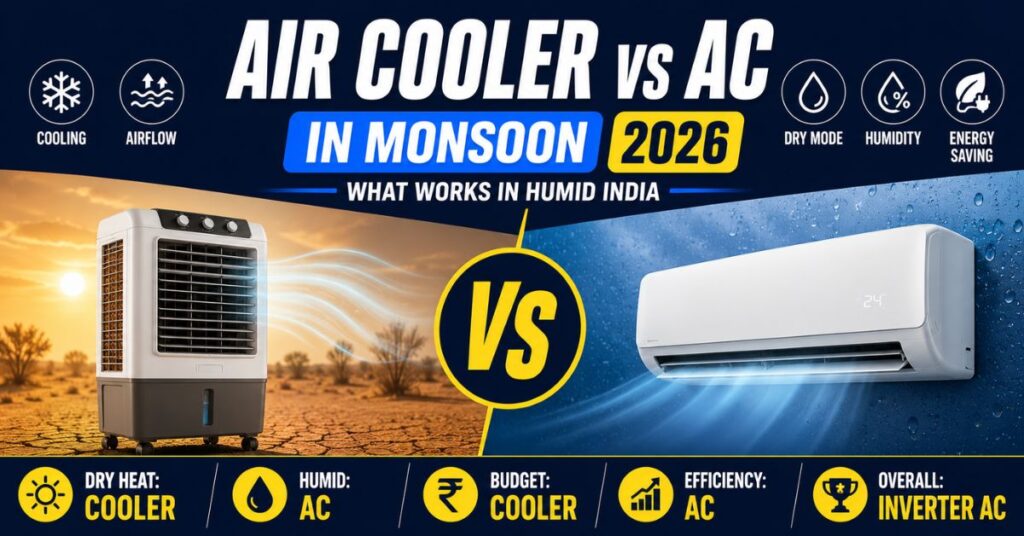
An air cooler works only in dry heat — it cools by evaporating water, which fails when the air is already humid. During the monsoon, an inverter AC is the clear winner because it cools and removes moisture (dehumidifies) for that “cool and dry” comfort. If you live in a dry-heat region, a desert cooler is still great for the pre-monsoon weeks.
Why air coolers fail in the monsoon -Air cooler vs AC monsoon India
An air cooler is an evaporative cooler: it blows air over a wet pad, and the water evaporating into the air is what cools it. That process only works when the air is dry enough to absorb more moisture. During the monsoon, when humidity sits at 70–90%+ in coastal and many inland cities, the air is already saturated — so the cooler can’t evaporate effectively, barely cools, and pumps even more humidity into your room. That’s the sticky, clammy feeling.
Why an inverter AC wins in humid weather
An AC cools by removing heat and condensing moisture out of the air, so it actively dehumidifies — exactly what you want in muggy monsoon weather. An inverter AC goes further: its compressor varies speed instead of switching fully on/off, so it holds a steady temperature, runs quieter and uses noticeably less electricity. Many models also have a dedicated “Dry”/dehumidify mode for rainy days when you want moisture gone more than deep cooling.Decision guide: which should you buy?
| Your situation | Best choice |
|---|---|
| Coastal / high-humidity city (Mumbai, Chennai, Kochi, Kolkata) | Inverter AC (with Dry mode) |
| Dry-heat region, mainly pre-monsoon use (Delhi-NCR, interior north) | Desert air cooler (+ AC if budget allows) |
| Tight budget, dry climate | Air cooler |
| Want year-round comfort + low bills | 5-star inverter AC |
| Already have AC, just fighting dampness | Use AC Dry mode / add a dehumidifier |
Planning the budget for your new appliance? Our free Budget Planner → helps you figure out what you can spend before you browse.
Best inverter ACs for monsoon comfort 2026
1. Voltas Inverter Split AC — Best Value Indian Brand
Approx. price (June 2026): ₹34,000–₹45,000 (1.5 ton) | Best for: Reliable, well-serviced cooling
Voltas is a trusted, widely-serviced Indian brand offering strong value inverter ACs with good dehumidification and high BEE ratings. A dependable pick for most homes that want effective monsoon comfort without overspending.Pros: Great value; wide service network; good dry-mode performance.
Cons: Premium features reserved for higher models.
Check Price on Amazon.in →2. LG Dual Inverter Split AC — Best Efficiency & Quiet
Approx. price (June 2026): ₹40,000–₹52,000 (1.5 ton) | Best for: Low bills, bedrooms
LG’s Dual Inverter ACs are known for energy efficiency, quiet operation and a long compressor warranty (up to 10 years on the compressor). Excellent for bedrooms and for keeping monsoon humidity in check on Dry mode.Pros: Very efficient; quiet; long compressor warranty.
Cons: Slightly pricier than entry value brands.
Check Price on Amazon.in →3. Daikin Inverter Split AC — Best Premium Cooling
Approx. price (June 2026): ₹45,000–₹60,000 (1.5 ton) | Best for: Best-in-class comfort
Daikin is the comfort connoisseur’s pick — excellent cooling, strong dehumidification and refined, quiet operation. If you want the most polished monsoon comfort and will keep the AC for years, it’s worth the premium.Pros: Top-tier comfort; great dehumidification; durable.
Cons: Highest price here.
Check Price on Amazon.in →Best air coolers for dry pre-monsoon heat 2026
4. Symphony Desert Air Cooler — Best Overall Cooler
Approx. price (June 2026): ₹9,000–₹16,000 | Best for: Dry-heat regions, big rooms
Symphony’s desert coolers are the go-to for dry-climate summers — large tanks, strong air throw and honeycomb pads for better cooling. Ideal for Delhi-NCR and interior north/central India before the monsoon arrives. Just don’t expect much once humidity climbs.Pros: Affordable; big room coverage; low running cost.
Cons: Ineffective in high humidity; needs water + ventilation.
Check Price on Amazon.in →5. Crompton / Bajaj Air Cooler — Best Budget Pick
Approx. price (June 2026): ₹6,000–₹12,000 | Best for: Small rooms, tight budgets
Crompton and Bajaj offer reliable, affordable coolers in personal and tower formats — perfect for a single room in dry weather without spending AC money. A sensible choice if your summers are dry and your monsoon plan is a fan plus a dehumidifier.Pros: Cheapest cooling; compact options; trusted Indian brands.
Cons: Limited coverage; useless in humid air.
Check Price on Amazon.in →Frequently asked questions
Can I use my air cooler during the monsoon at all?
In high-humidity weather it won’t cool well and adds moisture to the room. If you must, run it only as a fan (without the water pump) and keep a window open for cross-ventilation — but for real comfort in the rains, an AC’s Dry mode or a dehumidifier is the answer.Does an AC remove humidity like a dehumidifier?
An AC removes some moisture as it cools, and “Dry” mode focuses on that. But a dedicated dehumidifier pulls out far more moisture without cooling the room — best for damp wardrobes, indoor laundry and very muggy days. Many homes use both.Inverter AC vs normal AC — is it worth it?
Yes, for most people. An inverter AC holds temperature steadily, runs quieter and uses meaningfully less electricity over a season, so the higher upfront cost usually pays back — especially with heavy summer-plus-monsoon use.Related monsoon guides on Muniblogs
- Best Dehumidifiers in India for Monsoon 2026 →
- Best Washer-Dryers & Clothes Dryers for Monsoon 2026 →
- Best Water Purifiers in India for Monsoon 2026 →
- Best Inverter Batteries for Monsoon Power Cuts 2026 →
- Air Cooler vs Inverter AC in Monsoon: What Actually Works in Humid India (2026 Guide + Top Picks)
- Air Cooler vs AC India 2026 — Which Is Better for Indian Summer?
- Best Air Coolers Under ₹15,000 in India 2026
- Inverter vs Non-Inverter AC India 2026 — Complete Buying Guide
- Should You Wait for Diwali AC Sale or Buy Now? 2026 Guide
Bottom line: buy an air cooler only if your heat is dry, and lean on an inverter AC (with Dry mode) the moment humidity climbs. Match the appliance to your climate and you’ll be comfortable from the last dry days of summer right through the heaviest rains. Not sure which suits your city and budget? Take our free Appliance Quiz →